
When is hail season in Kansas?
Hail season in eastern Kansas runs from April through June, with May as the peak. In twenty years of NOAA records for Johnson, Miami, Wyandotte and Shawnee counties, 66% of hail reports of 1 inch or larger fell in those three months, and 84% fell between April and September.
What months is hail season in Kansas?
The short answer you usually hear is one word: spring. The federal storm record for the counties around Spring Hill, Olathe, Kansas City, Kansas and Topeka gives a sharper answer. The peak is late spring, but hail of 1 inch or larger, the size the weather service calls severe, has been reported here in every month from February to December.
We did not take that from another website. We downloaded the Storm Prediction Center's hail database and counted it ourselves. How we counted is further down this page, so you can check it.
| Month | Reports | Share | Bar |
|---|---|---|---|
| January | 0 | 0.0% | |
| February | 11 | 1.8% | |
| March | 73 | 12.1% | |
| April | 128 | 21.2% | |
| May | 160 | 26.4% | |
| June | 111 | 18.3% | |
| July | 38 | 6.3% | |
| August | 39 | 6.4% | |
| September | 34 | 5.6% | |
| October | 7 | 1.2% | |
| November | 3 | 0.5% | |
| December | 1 | 0.2% | |
| All year | 605 | 100% |
May is the busiest month and the most reliable one. It holds 160 of the 605 reports, and in 19 of the 20 years at least one report of 1 inch or larger came in May. April and June follow. Together, April, May and June hold 399 reports, about two out of every three.
When does hail season start in Kansas?
The season usually opens in April, but March is the month that catches people out. March holds 12% of the reports, more than July, August or September, yet those reports came in only 8 of the 20 years. Three Marches carried most of them: 29 reports in 2006, 18 in 2017 and 18 in 2024. The 2024 storm, on March 13, included a 3.50 inch report in Johnson County.
So March is not hail season every year. When it is, it can be a bad one.
When does hail season end in Kansas?
It tapers off rather than stopping. July, August and September together hold 111 reports, about 18% of the year, and September alone had reports in 10 of the 20 years.
After that the record goes quiet: October through February add up to 22 reports in twenty years. Quiet is not empty. The record includes 1 inch hail in Johnson, Miami and Shawnee counties on October 1, 2014, and in Johnson County on December 15, 2021.
Is hail season different in Kansas City, Kansas and Topeka?
The months line up. May was the top month in Johnson County, with 54 reports, and in Shawnee County, home to Topeka, with 73. Wyandotte County, which holds Kansas City, Kansas, has a smaller record of 67 reports, with March and May tied at 19 each. Miami County, around Paola and Osawatomie, had 48 reports, and May led there too.
Do not read the county totals as a map of where hail falls. Johnson County had 249 reports and Miami County 48, but a report needs someone to see the hail and file it, and the Storm Prediction Center itself notes that its data may not accurately reflect all storm events. Compare months, not counties.
What did hail season look like in 2026?
This year is not in the twenty year count, but it followed the same shape: a spring peak with a long tail. These dates and sizes come from the NOAA Storm Prediction Center reports listed on our city pages:
- March 10: 1.00 inch at Edgerton.
- April 15: hail to 4.00 inches reported at Paola, in Miami County.
- April 27: 1.75 inches 4 miles northwest of Topeka, and 1.75 inches southwest of Shawnee and southwest of Olathe.
- August 18 to 19: reports around Kansas City, Kansas reached 1.75 inches.
- September 15: 2.00 inches at Edgerton.
- October 13: 1.75 inches 7 miles south-southeast of Silver Lake.
Every report for Topeka and Silver Lake, with the time it was filed, is on the Topeka page. The others are on where we work and the city pages it links to.
What size hail dents a car?
The Storm Prediction Center's size table calls 1.00 inch a quarter, 1.75 inches a golf ball and 2.00 inches a hen egg. The National Weather Service changed its severe hail line from 0.75 inch to 1.00 inch in 2010, which is why our count starts at 1.00 inch.
Golf ball hail is already more than enough to dent a hood. In our count, 52 of the 605 reports were 2.00 inches or larger. The largest was 5.25 inches, in Shawnee County on May 21, 2011.
What should you do before and after hail season?
- From April through June, park under cover when you can. Those three months hold two thirds of the record.
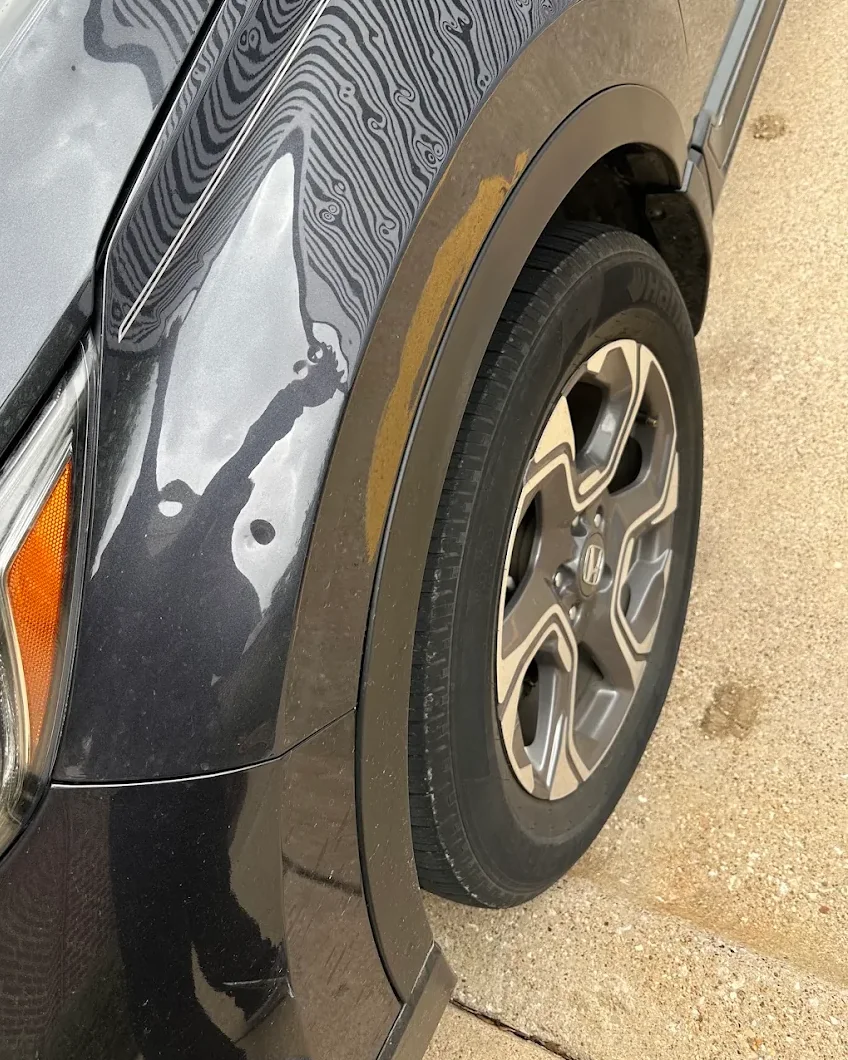
- After a storm, look at the car under a low, raking light. Hail damage shows up there and almost disappears under an overcast sky, which is why a quick look in daylight misses so much of it.
- Find your storm. The Storm Prediction Center publishes its reports by date at spc.noaa.gov/climo/reports.
- Read your own policy for its time limits. You file the claim, and your insurer decides coverage.
- Have the car seen in person. Our page on hail damage repair explains why photographs miss hail damage, and what to do after hail damages your car puts the steps in order.
How we counted
Source: the NOAA/NWS Storm Prediction Center severe weather database, file 1955-2025_hail.csv, downloaded as 1955-2025_hail.csv.zip from spc.noaa.gov/wcm on October 27, 2026.
Rows counted: state KS; first county FIPS code 091 (Johnson), 121 (Miami), 209 (Wyandotte) or 177 (Shawnee); years 2005 to 2024; hail size 1.00 inch or larger. Column meanings follow the SPC format specification: mag is the hail size in inches and f1 is the first county FIPS code. Every counted report carries time zone code 3, Central Standard Time. The county codes match the Census Bureau's 2020 list for Kansas.
These are reports, not storms: one storm can produce many reports. Counting storm dates instead gives nearly the same answer: 100 of the 157 dates with at least one report (64%) fell in April through June. A second, independent count of the same file returned the same 605 reports.
Hail season questions from Kansas drivers
What month has the most hail in Kansas?
In our count for Johnson, Miami, Wyandotte and Shawnee counties, May: 160 of 605 reports of 1 inch or larger from 2005 to 2024.
Does it hail in Kansas in the fall?
Sometimes. September had reports in 10 of the 20 years, and on October 13, 2026 a 1.75 inch report was filed 7 miles south-southeast of Silver Lake.
Is hail season in Kansas City, Kansas the same as in Topeka?
Mostly. May led in Shawnee County. Wyandotte County, with a smaller record, had March and May tied for first.
Should I wait for hail season to end before getting a dent looked at?
No. Dents do not settle out on their own, and the inspection tells you what is on the car now.
- NOAA Storm Prediction Center, hail database 1955-2025_hail.csv (counted)
- NOAA Storm Prediction Center, Severe Weather Database Files (2010 hail criteria note, data caveat)
- SPC database format specification
- SPC, hail size as related to objects
- U.S. Census Bureau, 2020 county codes for Kansas
- NOAA Storm Prediction Center, storm reports by date
Did hail already find your car this year?
Cranio Hail repairs hail damage across eastern Kansas, from Spring Hill and Olathe to Kansas City, Kansas and Topeka. The inspection is free and in person: we come to the car, there is no walk-in location, and there is no obligation afterwards. When a panel qualifies, paintless repair keeps the factory paint.