What paintless dent repair actually is
It reshapes the metal from behind the panel instead of filling and repainting the front of it. Your original factory paint is never sanded, filled or resprayed.
Sheet metal remembers its shape
A hailstone stretches the panel at the point of impact. The metal around that point is still exactly where the factory put it, and it is holding the dent in place under tension.
Paintless dent repair releases that tension instead of filling the hole. A technician reaches the back of the panel, works the stretched metal down in small increments, and the surrounding metal pulls the surface back to where it was.
None of that touches the outside of the panel. The clear coat, the colour and the primer that left the factory on your car are the same ones on it afterwards.
How paintless dent repair actually works
Three stages, seen from the side, through the thickness of a single panel.
Hail lands on the flat panels
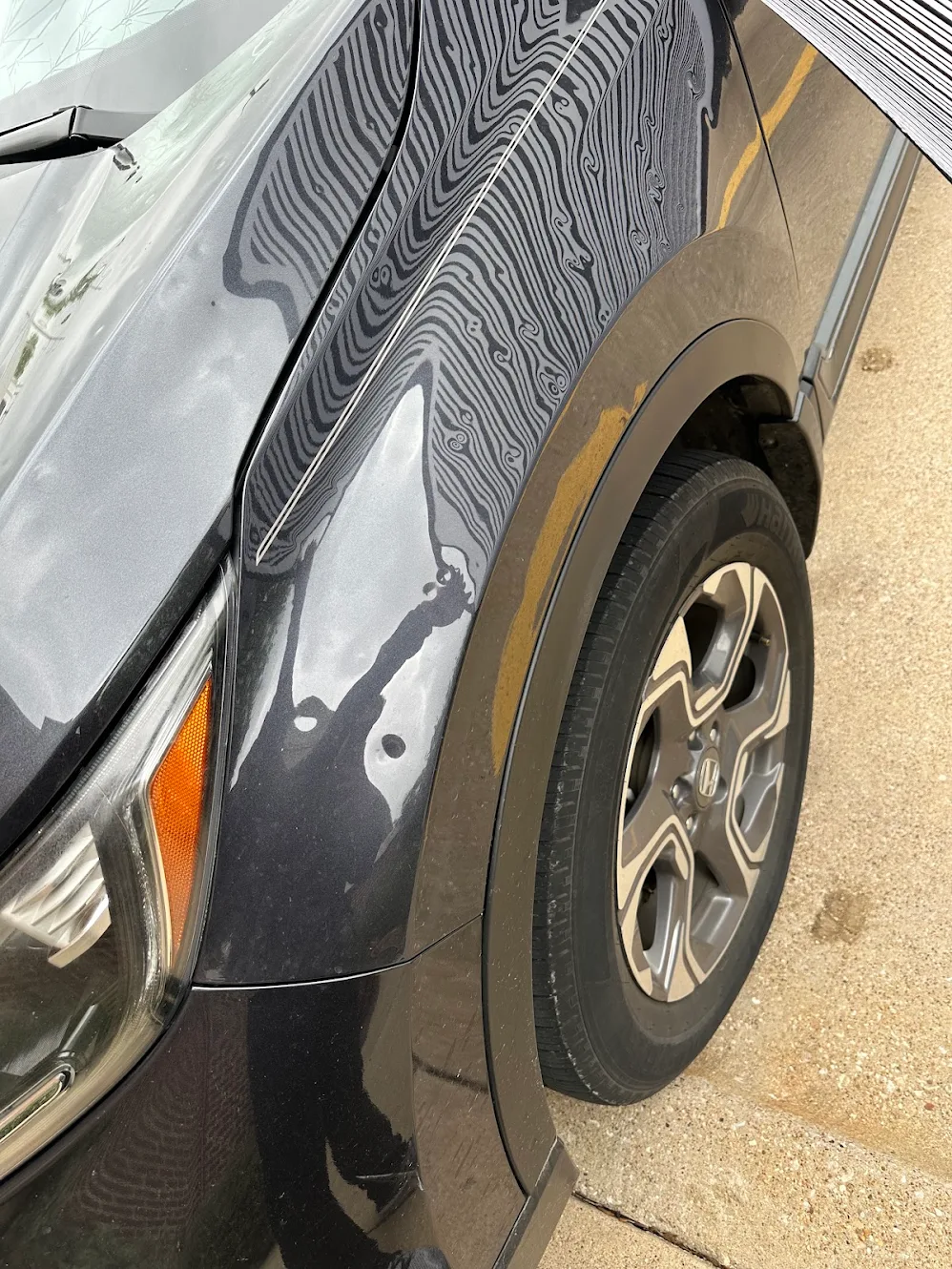
Hood, roof and trunk lid take it first. The metal gives, and the paint stretches with it instead of breaking.
The rod works from behind
We reach the back of the panel and push the metal back to where it was, a little at a time.
Nothing is sanded, filled or sprayed
The paint that leaves with you is the paint the factory put on. That is the whole point of the method.
When a panel qualifies, and when it does not
Paintless repair is not a universal answer, and a shop that tells you it is has not looked at your car yet.
Usually comes out
- Round hail dents on a hood, roof or trunk lid, where the paint is unbroken
- Dents the technician can reach from behind the panel
- Dozens or hundreds of small impacts, which is what a hailstorm actually leaves
- Panels where the metal was stretched but not torn
Needs conventional work
- Cracked, chipped or flaking paint at the impact
- Dents on a sharp body line or a double-skinned edge with no access behind it
- Aluminium panels, which behave differently and do not always release
- Glass, trim, mirrors and lights, which are replaced and not worked
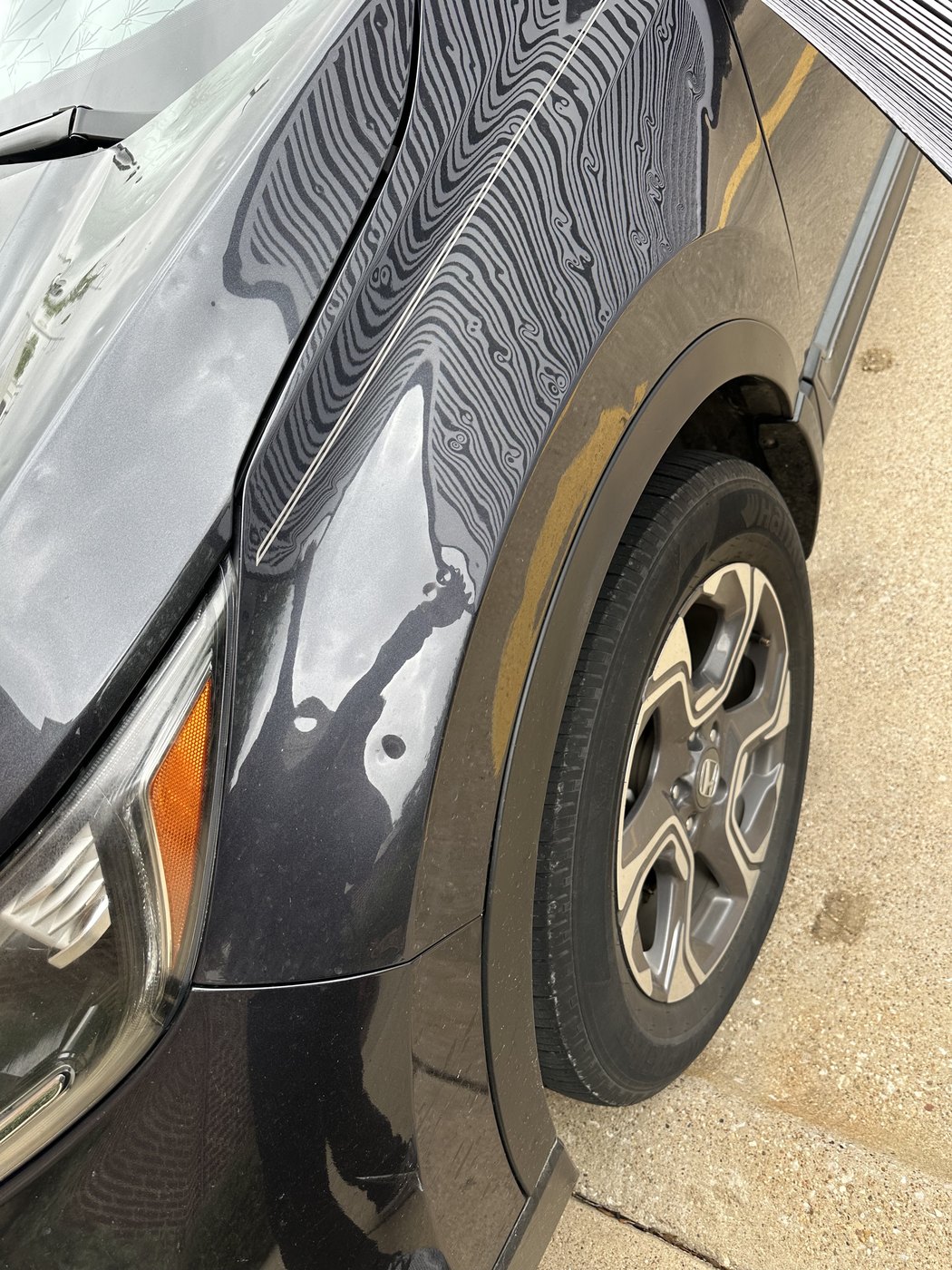
Where conventional bodywork or refinishing is required, we tell you before work begins. That is written into our Terms of Service, not just said out loud.
Paintless repair against conventional bodywork
Neither one is the right answer for every car. This is how we decide which one your panels need, and we decide it at the inspection rather than on the phone.
| Compared on | Paintless dent repair | Conventional bodywork |
|---|---|---|
| The paint | Never sanded, filled or resprayed. The clear coat, the colour and the primer that left the factory are the same ones on the car afterwards. | The panel is filled, sanded, primed and sprayed. The original finish on that panel is gone. |
| Colour match | There is nothing to match. It is the same paint it always was. | A new mix has to be blended into the neighbouring panels to disappear. |
| What it is for | Round hail dents on a hood, roof or trunk lid where the paint is unbroken. Dozens or hundreds of them, which is what a storm actually leaves. | Cracked or flaking paint at the impact, sharp body lines with no access behind them, torn metal, and glass or trim that gets replaced rather than worked. |
| Time on the car | Most repairs are finished within five days of your carrier approving the estimate. | Longer. Paint has to cure, and the panel comes back for reassembly. |
How hail gets measured
The weather service describes hail by everyday objects, because it is the fastest way to picture the impact. These are the three sizes that show up most in the Kansas reports.
Sizes follow the NOAA hail size table. Golf ball is already more than enough to dent a hood. You can read the reports filed near your city on the service areas page.
The sizes, drawn against each other
The weather service names hail after everyday objects because it is the fastest way to picture the impact. Drawn to scale, the jump from a golf ball to a softball is the part the words hide.
- Quarter1 inch
- Golf ball1.75 inches
- Tennis ball2.5 inches
- Baseball2.75 inches
- Softball4 inches
Where hail lands on a car
Hail falls close to vertical, so it collects on the flat panels and mostly misses the doors and the sides. Those three panels are where the damage count is decided.
It has to be seen in person
Whether a panel qualifies is a question about your specific car, on the day, under a light. Nobody can answer it from a photograph, and anybody who does is guessing.
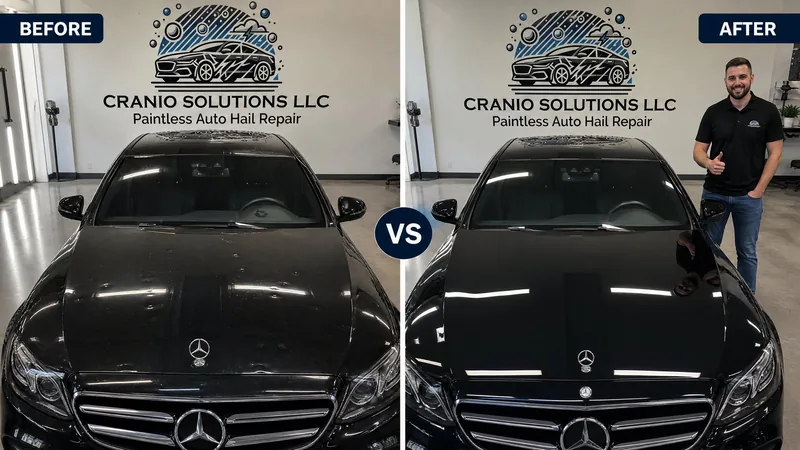
The same car, the same spot, before and after
The paint on the after half is the paint the car left the factory with. Nothing was sanded, filled or sprayed to get there.
Carfax and resale value
Two questions come up the moment somebody realises the repair goes through insurance. Here is what we can tell you, and where the honest answer stops being ours to give.
Does hail damage show up on Carfax?
We cannot tell you what a vehicle history report will say about your car, and anybody who promises you it will stay clean is guessing. Those reports are assembled by companies outside this transaction, from sources that include insurers, repair facilities, auctions and state agencies.
What we can point at is which event creates the record. It is the claim, not the repair method, and your carrier is the only one who can tell you what they report. Ask them on the same call where you ask what your deductible is. What happens after that call is laid out on the hail insurance claim process page.
Does paintless dent repair affect resale value?
This is where the repair method genuinely matters. Paintless dent repair does not sand, fill or respray anything, so the car keeps the finish it left the factory with. A repainted panel is a different conversation, because paint depth and texture are measurable and a dealer appraiser looks for exactly that.
We are not going to put a number on what that is worth to you. Appraisal is somebody else's trade, it moves with the model, the mileage and the market on the day, and Section 13 of our Terms of Service says plainly that we do not take on diminished value. What we will give you is a written record of what was done to each panel.
The question that always follows these two is what the repair costs. That one is answered on the hail claim process page, together with how long the car is with us and what a comprehensive claim means for your rate.
Find out what your panels need.
The inspection is free, takes about 30 minutes, and there is no obligation afterwards.