
Will hail total my car in Kansas?
Hail can total a car in Kansas, and whether it does is your insurer's decision under your policy. Kansas law sets a 75% line for late model cars, with an exception for damage that is merely exterior cosmetic damage from hail.
What is the 75% rule for a totaled car in Kansas?
The rule sits in the definition of a salvage vehicle, K.S.A. 8-197(b)(2)(B). A late model vehicle is a salvage vehicle when it has been damaged to the extent that the total cost of repair is 75% or more of its fair market value immediately before the damage, and that condition was not merely exterior cosmetic damage from windstorm or hail. Three definitions in the same section decide how that works for your car.
Late model
A car whose model year is the year it was damaged, any of the six years before it, or later. For hail in 2026, that means model year 2020 or newer.
Fair market value
The car's retail value, taken from a nationally recognized guide or database, or from a market survey of comparable vehicles with regard to condition and equipment.
Cost of repairs
The retail cost of the parts plus labor at customary and reasonable rates. Tires, sound systems and sales tax on parts are left out of it.
The Kansas Insurance Department's Auto Insurance Shopper's Guide states the same line in plain words: a car 7 years old or newer, with damage that meets or exceeds 75% of its retail value, must be declared a total loss. For older cars, the guide says, it varies by company.
Does hail damage count toward the 75% in Kansas?
Read the exact words, because the exception is narrower than it sounds. Subsection (B) does not make a late model car a salvage vehicle when its condition was merely exterior cosmetic damage from windstorm or hail. It does not say hail can never total a car.
Two things limit it. The statute does not define merely exterior cosmetic damage, so whether broken glass or lights on a hail-damaged car still fit that description is not answered in the text. And the next subsection, 8-197(b)(2)(C), makes any car a salvage vehicle when the insurer determines it is a total loss and takes title. That subsection does not ask what caused the damage.
So the exception is about the title. The definitions in 8-197 are written for the salvage title sections, 8-197 through 8-199. Whether your carrier pays the car out as a total loss is a separate question, and the department's guide sends you to your policy for it: what counts as a total loss varies depending on your policy.
Who decides if my car is totaled?
Your insurer. Subsection (C) is written around the insurer's own determination, and the department's guide notes that when the company works out retail value or actual cash value, it may reference online valuations. Your policy is the first document to read.
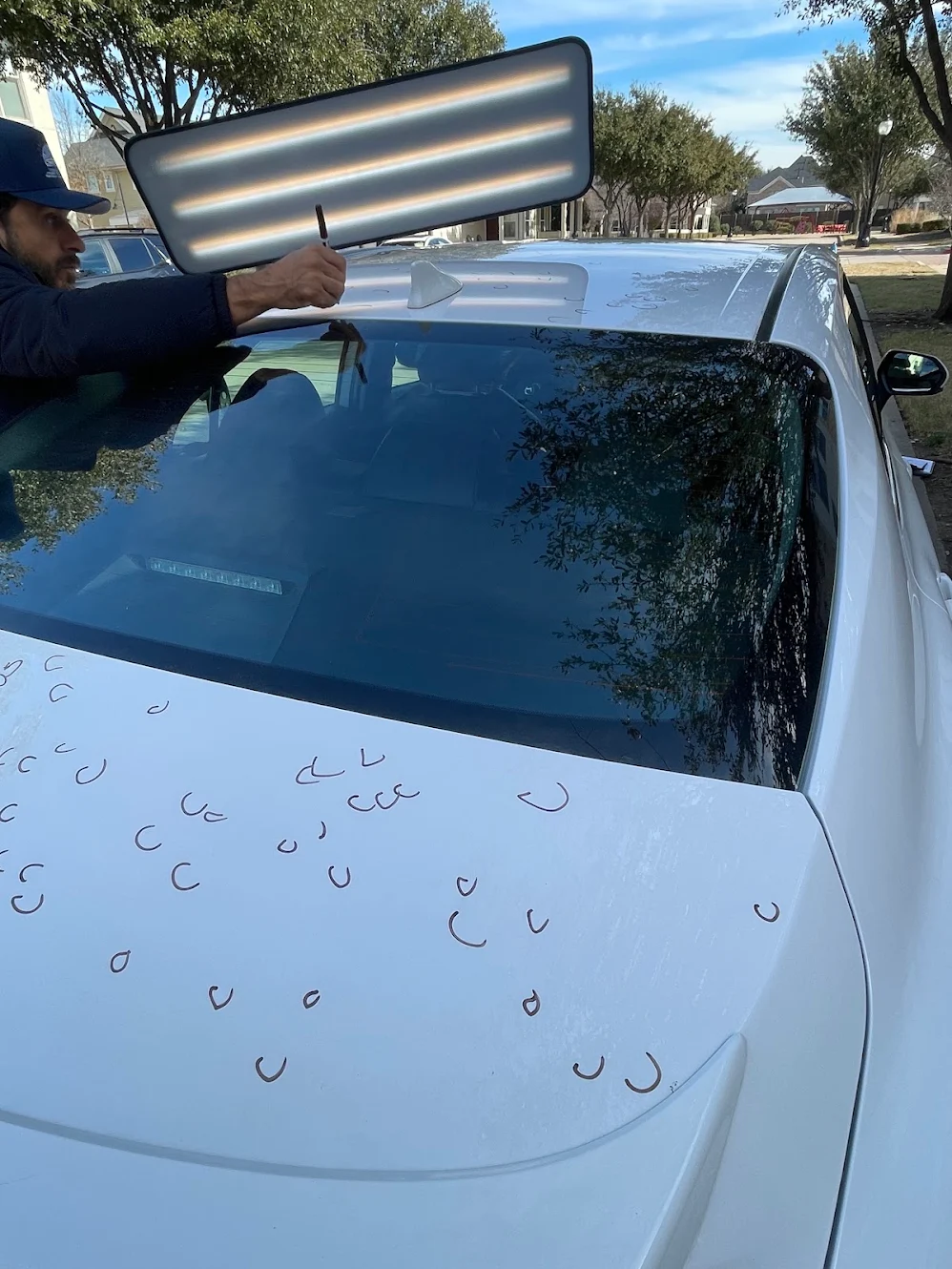
The repair shop does not decide it, and neither do we. What a shop controls is the other half of the ratio: the written estimate of what the repair costs. An estimate built on a quick look misses damage, which is why we photograph and count what is there, panel by panel, at the vehicle. If the car is repairable and you are weighing the check against the repair, read whether you can keep the hail check.
What happens to the title if hail totals my car?
It depends on who ends up with the car. These are the steps the statute sets out.
If the insurer takes the car
- The car is a salvage vehicle under 8-197(b)(2)(C), whatever caused the damage.
- The insurer applies for the salvage title within 60 days after you sign the title over to it, with all liens released (8-198(d)(2)).
If you keep the car
- If the damage requires a salvage designation, the insurer has to tell you, and you have 60 days from that notice to apply for a salvage title at the county treasurer (8-198(d)(3)). Not applying is a class C nonperson misdemeanor.
- A car totaled only by exterior cosmetic hail damage may not meet the definition at all: (B) excludes it, and (C) needs the insurer to take title. Ask your insurer to put its determination in writing, and ask your county treasurer's office what it needs before you go.
- The settlement subtracts the car's salvage value when you keep it, according to the department's Bulletin 2013-1.
What can I do if my insurer says the car is totaled?
Ask for the numbers in writing
Ask for the valuation and the repair estimate the decision was based on. Under K.A.R. 40-1-34, an insurer that prepares a repair estimate gives you a copy, any deduction from a total loss settlement, salvage included, must be itemized and specified as to dollar amount, and the basis for the settlement has to be fully explained to you.
Check what the settlement includes
A cash settlement is based on the cost of buying a comparable car: the same make, model, year, style and condition, with its major options, including the taxes, license fees and other transfer fees that come with buying it. Bulletin 2013-1 says the taxes and fees are owed whether the insurer takes the car or you keep it.
Use the 30-day recourse if you cannot replace the car
If you cannot buy a comparable car for the amount of the claim check, tell the insurer within 30 days of receiving it. The regulation says the insurer reopens the file within five business days, then pays the difference, buys the car you found, or offers a replacement. Comparable cars are looked for within 50 miles of where yours is normally garaged.
Call the Kansas Insurance Department if you are stuck
If you cannot resolve it with your insurer, the department's Consumer Assistance Division takes calls at 1-800-432-2484, and complaints can be filed online at insurance.kansas.gov/complaint.
We are not a public adjuster, we do not represent you before your carrier, and we do not give insurance advice. This page is a reading of public law, not advice about your policy. How the rest of a claim runs is on the hail claim process page.
Hail total loss questions from Kansas drivers
Is a 2019 car a late model vehicle for hail in 2026?
No. For damage in 2026, the statute's late model window covers model year 2020 and newer. For older cars, the department's guide says the total loss decision varies by company.
Do tires or the stereo count toward the 75%?
No. The cost of repairs in 8-197(b)(8) leaves out tires, sound systems and sales tax on parts.
Will a hail total follow the car when I sell it?
If the car became a salvage vehicle, yes. Kansas makes it unlawful to sell a salvage vehicle without handing the buyer the salvage title (8-199(a)). A rebuilt one needs an inspection and a rebuilt salvage title, and the Kansas Highway Patrol attaches a notice to the left door frame saying so (8-198(f)(3)).
Do I need the claim open before an inspection?
No. We can look at the car and tell you what is there first. If you are comparing who should do that, here is how to choose a hail repair company.
- K.S.A. 8-197, definitions (Kansas Revisor of Statutes)
- K.S.A. 8-198, salvage titles
- K.S.A. 8-199, sale of a salvage vehicle
- Kansas Insurance Department, Auto Insurance Shopper's Guide
- K.A.R. 40-1-34, unfair claims settlement practices (Kansas Insurance Department)
- Kansas Insurance Department Bulletin 2013-1 (November 20, 2013)
Find out what is actually on the car.
The inspection is free, takes about 30 minutes, and there is no obligation afterwards.